
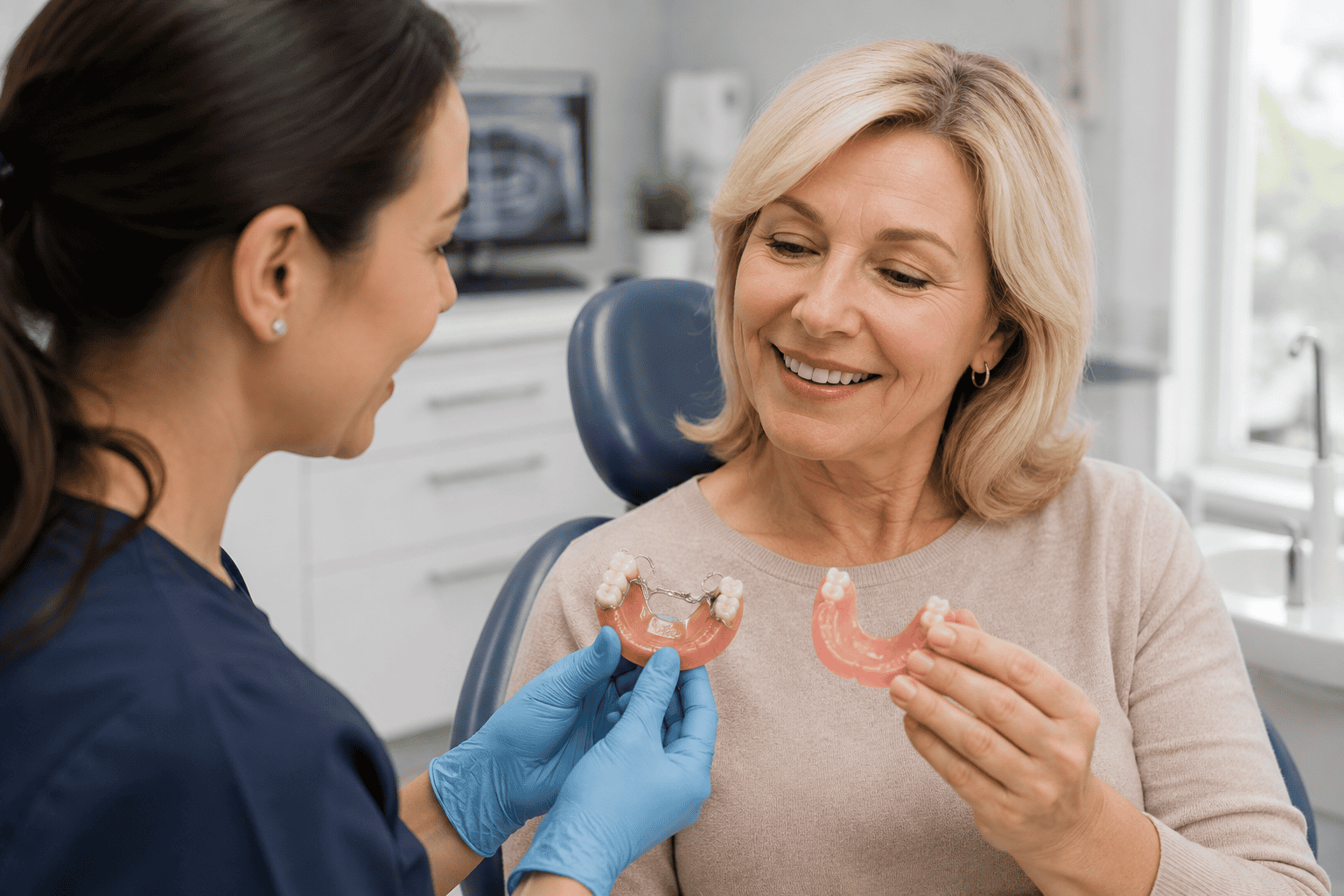
Partial dentures can restore missing teeth while allowing healthy natural teeth to remain in place. They help fill visible gaps, improve chewing, support clearer speech, and prevent surrounding teeth from gradually shifting out of position. Once a partial denture has been recommended, one of the next decisions may involve the material used to create it.
Two common options are acrylic partial dentures and partial dentures made with a metal framework. Both are designed to restore function and appearance, but they differ in the way they feel, how they are constructed, their strength, and the situations in which they may be recommended.
At SureFit Denture Clinic in West Vancouver, partial dentures are customized around the individual. The right material is chosen by considering the number and location of missing teeth, the condition of the remaining natural teeth, comfort preferences, lifestyle, and budget. There is no single material that is automatically right for everyone. The best choice is the one that supports the patient’s mouth and everyday needs most effectively.
Understanding Partial Dentures
A partial denture replaces one or more missing teeth when healthy natural teeth remain in the upper or lower jaw. It is designed to fit around those teeth and restore the spaces created by tooth loss.
Partial dentures can help improve several areas of daily life. They can make chewing feel more balanced, support speech, restore a more complete smile, and reduce the likelihood of neighbouring teeth drifting toward open spaces.
Unlike complete dentures, which replace an entire arch of teeth, partial dentures work alongside the patient’s remaining natural teeth. This makes the design and material especially important because the appliance must fit comfortably within the existing smile.
Why the Material Matters
The material used in a partial denture affects more than appearance. It can influence the thickness of the appliance, how it feels in the mouth, the way it gains support from remaining teeth, and how it responds to everyday chewing forces.
Acrylic and metal framework partial dentures can both provide dependable tooth replacement when they are properly designed and fitted. The difference lies in how each option achieves that result.
The choice should be based on the full clinical picture rather than appearance or price alone.
What Is an Acrylic Partial Denture?
An acrylic partial denture is typically made with a gum-coloured acrylic base that supports the replacement teeth. Depending on the design, clasps may be used to help hold the denture in place around the remaining natural teeth.
Acrylic partial dentures are widely used because they can provide an accessible and adaptable way to replace missing teeth. They can be particularly useful when the mouth may change in the future or when additional teeth may eventually need to be added to the appliance.
The Appearance of Acrylic Partial Dentures
The pink acrylic base is designed to resemble natural gum tissue, while the replacement teeth are selected to blend with the patient’s existing smile.
The final appearance depends heavily on thoughtful tooth selection, colour matching, and the way the denture is designed around the remaining teeth. A well-crafted acrylic partial denture should restore the missing areas without looking out of place.
The Feel of an Acrylic Partial Denture
Acrylic requires enough material to provide support and strength. As a result, an acrylic partial may feel somewhat fuller or thicker than a metal framework design.
Patients often become more comfortable with this feeling as they adjust to the appliance. The quality of the fit remains one of the most important factors in whether the denture feels secure and manageable in daily life.
Flexibility for Future Changes
One of the practical advantages of acrylic is that it may be easier to modify in certain circumstances. If the patient’s needs change, it may be possible to add a replacement tooth or make other adjustments to the existing appliance.
This can make acrylic a useful option when future dental changes are anticipated or when a more transitional solution is appropriate.
What Is a Metal Framework Partial Denture?
A metal framework partial denture uses a carefully designed metal structure beneath the replacement teeth and gum-coloured portions of the appliance. The framework provides strength and helps distribute support across the remaining teeth and oral tissues.
Because metal is strong even when made relatively thin, this type of partial denture can often feel less bulky in the mouth than an acrylic design.
The Appearance of a Metal Partial Denture
Most of the metal framework sits within the denture and is not prominently visible during normal smiling or speaking. However, the design may include clasps or other components that connect with the remaining teeth.
The visibility of these components depends on the position of the missing teeth, the shape of the mouth, and the final design. Careful planning helps balance retention, function, and appearance.
The Feel of a Metal Framework
A metal framework can often be made thinner than a full acrylic base while still maintaining strength. Many patients appreciate the lighter, more streamlined feel this can create.
Less material covering certain areas of the mouth may also help the appliance feel less bulky once the patient has adjusted to wearing it.
Strength and Long-Term Use
Metal frameworks are designed to provide durable structural support. When the remaining teeth and oral condition are suitable, a metal partial denture can offer a stable and long-lasting solution.
As with any denture, its longevity depends on fit, daily care, changes in the mouth, and regular professional follow-up.
Acrylic vs Metal Partial Dentures: The Main Differences
Both materials can restore missing teeth successfully, but they approach the task differently.
Thickness and Weight
Acrylic partial dentures often require more material to provide the necessary support. This can make them feel fuller in the mouth.
Metal frameworks can generally be made thinner because of their strength. This may create a lighter and less bulky experience for some patients.
Strength
Metal partial dentures tend to offer greater structural strength in a thinner framework. This can make them a dependable choice for long-term use when the remaining natural teeth can support the design.
Acrylic partial dentures can also perform well, but the material may be more vulnerable to cracking or breaking if the appliance is dropped or placed under excessive stress.
Ease of Adjustment
Acrylic appliances may offer greater flexibility when future modifications are needed. In some cases, replacement teeth can be added more easily if the patient later loses another tooth.
Metal framework partials can also be repaired or adjusted, but significant design changes may be more involved because of the framework beneath the acrylic.
Cost
Acrylic partial dentures are often the more budget-conscious option because their construction is generally less complex.
Metal framework dentures typically involve more detailed planning and fabrication, which may result in a higher initial cost. The right decision should consider not only the initial investment, but also comfort, expected use, oral condition, and long-term treatment goals.
Treatment Purpose
Acrylic may be chosen as a transitional or adaptable solution in situations where the mouth is expected to change. It can also serve as a long-term option when appropriately designed.
Metal partial dentures are often considered when a more durable, precise, and streamlined framework is suitable for the patient’s remaining teeth and oral health.
Which Option Looks More Natural?
The natural appearance of a partial denture depends on much more than whether it is made from acrylic or metal.
Tooth colour, size, shape, position, and the way the denture blends with the remaining natural teeth all influence the final result. The design of the clasps and their location can also affect visibility.
A careful fitting and try-in process allows appearance to be reviewed before the partial denture is finalized. Patients should feel comfortable discussing tooth shade, tooth position, and any visible components during this stage.
The goal is a result that restores the smile without drawing unnecessary attention to the appliance.
Which Option Feels More Comfortable?
Comfort depends on the material, but it also depends heavily on fit and design.
A metal partial may feel thinner and less bulky, which some patients find more comfortable. An acrylic partial may feel fuller, but it can still provide a comfortable result when it is carefully customized and properly adjusted.
The patient’s anatomy also matters. The position of the missing teeth, the shape of the arch, the health of the gums, and the condition of the remaining natural teeth all affect how a partial denture will feel.
Comfort should therefore be evaluated individually rather than assumed based on material alone.
The Health of the Remaining Teeth Is Important
Partial dentures rely on the remaining natural teeth and surrounding oral structures for support. Before selecting a material, the condition and stability of those teeth must be assessed carefully.
Healthy remaining teeth may be able to provide strong support for a precisely designed metal framework. If the dental condition is expected to change, a more adaptable acrylic design may sometimes be considered.
The recommendation should always account for the long-term health of the entire mouth, not just the spaces being filled.
How Lifestyle Can Influence the Decision
The right partial denture should fit naturally into everyday life.
Patients who place a high priority on a thinner, more streamlined appliance may prefer the benefits of a metal framework. Those who want a more economical or adaptable option may find acrylic better suited to their circumstances.
Eating habits, dexterity, comfort preferences, treatment expectations, and the likelihood of future dental changes can all influence the decision.
There is no universally superior material. There is only the material and design that best match the individual patient.
The Importance of the Try-In and Fitting Process
Regardless of the chosen material, the fitting process plays a major role in the final result.
During a try-in appointment, the appearance, bite, tooth position, and overall feel of the proposed partial denture can be reviewed. Adjustments can then be made before the appliance is completed.
After delivery, additional refinements may be needed as the patient becomes accustomed to wearing the denture. Follow-up care helps address pressure areas, bite concerns, or other issues that may only become noticeable during normal daily use.
A partial denture should feel stable and supportive without creating unnecessary irritation to the surrounding gums or natural teeth.
Caring for Acrylic and Metal Partial Dentures
Both acrylic and metal partial dentures require consistent daily care.
The appliance should be cleaned gently to remove food particles, plaque, and buildup. It should also be handled carefully to reduce the risk of damage.
Special attention should be given to the remaining natural teeth, particularly around the areas where the partial denture connects or rests. Maintaining those teeth is an essential part of protecting the fit and function of the appliance.
Patients should avoid trying to bend clasps, reshape the denture, or complete repairs at home. When a partial denture becomes damaged, loose, or uncomfortable, professional denture repair is the safer approach.
When Another Treatment May Be More Appropriate
Partial dentures are an excellent option for many patients, but they are not right for every situation.
When no healthy natural teeth remain in an arch, complete dentures may provide the more appropriate solution. When greater stability is a priority and the patient is a suitable candidate, implant dentures may also be considered.
The best treatment plan should reflect the number of missing teeth, the health of the remaining teeth, the condition of the supporting tissues, and the patient’s long-term goals.
Personalized Partial Denture Care in West Vancouver
Choosing between acrylic and metal is not a decision patients need to make alone.
At SureFit Denture Clinic in West Vancouver, partial denture treatment begins with an assessment of the mouth, the remaining natural teeth, and the patient’s priorities. The material, design, tooth shade, and fit are then planned around those individual needs.
Some patients benefit from the flexibility and accessibility of acrylic. Others prefer the strength and streamlined design of a metal framework. Both can provide a comfortable and natural-looking result when they are selected appropriately and crafted with precision.
Final Thoughts
Acrylic and metal partial dentures both offer effective ways to replace missing teeth while preserving healthy natural teeth. Acrylic partials may provide greater adaptability and a more accessible starting point, while metal framework partials can offer a thinner design, additional strength, and a streamlined feel.
The right choice depends on much more than the material itself. Comfort, oral health, appearance, expected future changes, lifestyle, and budget should all be considered together.
At SureFit Denture Clinic in West Vancouver, partial dentures are designed around the individual rather than a standard template. Through careful assessment, precise planning, and personalized fittings, the goal is to create a partial denture that restores function, blends naturally with the smile, and feels dependable in everyday life.
Travelling With Dentures: What to Check Before You Leave and What to Pack
Looking for dentures that feel natural and fit your life? We’re here to walk you through traditional and digital options, so you can find the best choice for your smile.
What Happens During a Denture Reline? A Simple Way to Improve the Fit of Dentures You Already Have
Looking for dentures that feel natural and fit your life? We’re here to walk you through traditional and digital options, so you can find the best choice for your smile.
What Are Immediate Dentures? How You Can Leave With Teeth the Same Day as Extractions
Looking for dentures that feel natural and fit your life? We’re here to walk you through traditional and digital options, so you can find the best choice for your smile.

Implant Dentures for Active Adults: Why Stability Matters Beyond Eating
Looking for dentures that feel natural and fit your life? We’re here to walk you through traditional and digital options, so you can find the best choice for your smile.
Booking your first denture consultation is an important step toward improving comfort, restoring confidence, and finding the right solution for your smile. For many people, that first visit also comes with questions. They want to know what the appointment will involve, what the clinic will be looking for, and how treatment recommendations are made. At SureFit Denture Clinic in West Vancouver, consultations are designed to be comfortable, personalized, and informative, giving patients a clear understanding of their options and what comes next. SureFit’s service pages note that consultations for services like complete, partial, and implant dentures typically last about an hour and are intended to be a relaxed, stress-free experience.
A consultation is not only about deciding whether dentures are needed. It is about understanding your smile, your goals, your current oral condition, and the type of result that will best support daily life. Some patients arrive knowing they need a replacement for missing teeth. Others are not yet sure whether they need a repair, a reline, a partial denture, a complete denture, or a more secure option such as implant dentures. The consultation is where those questions begin to take shape in a practical and personalized way.
Why the First Consultation Matters
The first consultation sets the foundation for everything that follows. A denture should never be approached as a one-size-fits-all solution. The fit, appearance, and function of a denture all depend on understanding the patient as an individual. That means looking carefully at the current condition of the mouth, listening to any concerns about comfort or appearance, and discussing how the denture needs to function in everyday life.
This first appointment is also where many patients begin to feel more at ease. Tooth loss and denture treatment can feel overwhelming at first, especially for someone who has never gone through the process before. A thoughtful consultation helps replace uncertainty with a clearer plan. It also gives patients the opportunity to ask questions, understand the treatment options in front of them, and move forward with more confidence.
A Comfortable Conversation About Your Needs
The consultation usually begins with a conversation. This part of the visit is important because it helps shape the rest of the appointment. Your denturist will want to understand what has brought you in, what concerns you may already have, and what kind of result you are hoping to achieve.
Talking About Your Current Situation
Some patients come in because they are missing teeth and want to explore their options for the first time. Others already wear dentures but are dealing with looseness, discomfort, visible wear, or a fit that no longer feels right. In that case, the conversation may include whether denture repair, a reline, or a new denture would make the most sense based on the condition of the current appliance.
Discussing Comfort, Function, and Appearance
The first consultation is also where your priorities become part of the treatment plan. For some people, the biggest concern is eating comfortably again. For others, it is speaking clearly or feeling more confident when smiling. In many cases, it is a combination of all three. These details matter because the best denture solution should support your life in a practical and natural way.
Examining the Mouth and Oral Structures
After discussing your concerns and goals, the clinical assessment becomes the next major part of the consultation. SureFit’s implant denture page describes treatment as beginning with a comprehensive oral exam, and that same kind of individualized evaluation is central to choosing the right denture solution more broadly.
During this part of the visit, the denturist assesses the overall condition of the mouth, including the gums, the way the arches relate to one another, and the health and position of any remaining teeth. This helps determine which denture options are most suitable and what kind of fit and support can realistically be achieved.
If Natural Teeth Still Remain
If you still have healthy natural teeth, the consultation may include a discussion about whether partial dentures are the best path forward. Partial dentures can be an excellent option when the goal is to replace missing teeth while preserving the teeth that are still healthy and functional.
If Full Replacement Is Needed
If all teeth in one arch or both arches are missing, or if the remaining teeth are too compromised to preserve long term, the conversation may turn toward complete dentures. Complete dentures are designed to restore a full smile and improve function when full arch replacement is the right next step.
Reviewing Your Denture Options
Once the exam is complete, the consultation moves into one of the most valuable parts of the visit: understanding the available treatment options. This is where the appointment becomes especially helpful for patients who are still unsure which type of denture is right for them.
At SureFit, the available service mix includes complete dentures, partial dentures, implant-supported dentures, denture repair, and same-day repairs and relines. That means the conversation can stay focused on what truly fits your needs rather than forcing every patient into the same path.
Complete Dentures
If a full smile replacement is needed, complete dentures may provide the best balance of function, appearance, and comfort. The consultation will help determine whether this option matches the condition of the mouth and your long term goals.
Partial Dentures
If healthy teeth remain and can continue supporting the smile, partial dentures may be the more conservative and practical option. This allows missing teeth to be replaced while preserving the natural teeth that are still contributing to daily function.
Implant Dentures
If greater stability is a priority, the consultation may also include a discussion about implant dentures. SureFit notes that implant denture candidacy depends in part on factors such as jaw bone support, which is why proper assessment is so important early in the process.
Digital Denture Technology May Be Part of the Conversation
SureFit also highlights digital dentures and 3D scanning as part of its modern approach to care, describing digital dentures as a cleaner, more precise alternative to older methods and noting that digital records can make future replacements easier. During your first consultation, this may become part of the discussion if digital treatment planning is the right fit for your case.
For many patients, this is reassuring. It means the consultation is not only about choosing a denture category. It is also about understanding how the denture will be planned and created. A more modern workflow can offer benefits in comfort, fit, and long term convenience, especially for patients who want a more refined treatment experience.
What You Can Expect Emotionally During the Visit
A first denture consultation is not just a clinical appointment. It is often an emotional step too. Some patients arrive feeling embarrassed about tooth loss. Others feel nervous about whether dentures will look natural or whether they will be comfortable to wear. These are normal concerns, and the first visit should help ease them rather than add to them.
SureFit’s service pages consistently describe consultations as relaxed, comfortable, and hassle-free. That matters because the right clinic experience should leave patients feeling informed and supported. A consultation should not feel rushed or impersonal. It should feel like the beginning of a thoughtful plan built around your needs.
Questions You May Want Answered at Your Consultation
Many patients benefit from preparing a few questions before the first visit. This helps make the appointment more useful and gives you a better sense of what the treatment plan may involve.
Which Denture Option Fits My Smile Best?
This is often the most important question. Whether the answer involves a full denture, a partial denture, a repair, or implant support, the consultation is where the recommendation becomes clearer.
How Will the Denture Fit and Feel?
Fit is one of the biggest concerns for patients, and understandably so. The consultation should include a discussion about comfort, retention, and what kind of outcome can be expected based on your oral condition.
What Happens After the Consultation?
Patients often want to know what comes next after the initial visit. The answer depends on the treatment plan, but the consultation should leave you with a clear sense of direction rather than uncertainty.
What Happens After the First Visit
Once the consultation is complete, the next steps depend on what the assessment has shown. In some cases, a patient may move forward with a new denture plan. In others, the best path may involve restoring an existing appliance through repair or reline. Some patients may need a more detailed discussion about implant-supported options, while others may simply need time to consider the recommendation and decide how they want to proceed.
What matters most is that the next step feels appropriate and well explained. A strong consultation should not leave you guessing. It should leave you with clarity about your options and confidence in what the clinic is recommending.
Why West Vancouver Patients Choose a Personalized Consultation
West Vancouver patients are often looking for care that feels modern, attentive, and tailored to the individual. SureFit’s combination of personalized consultations, digital denture innovation, and a broad range of denture services supports that kind of experience. The clinic’s contact page invites patients to call or email to book a denture appointment and notes that calling is the fastest way to arrange care.
That type of accessibility matters because denture treatment is not just about replacing teeth. It is about improving quality of life. The first consultation is where that process begins.
Final Thoughts
Your first denture consultation in West Vancouver should feel like the start of a solution, not the start of confusion. It is an opportunity to understand what is happening in your mouth, what options are available, and which treatment path is most likely to restore comfort, function, and confidence. At SureFit Denture Clinic, consultations are designed to be relaxed, informative, and personalized, with enough time to assess your needs and guide you toward the right next step.
Whether the best recommendation involves complete dentures, partial dentures, implant dentures, or denture repair, the goal remains the same: helping you move forward with greater comfort and a clearer sense of what your smile needs. To book an appointment, visit the SureFit contact page.