
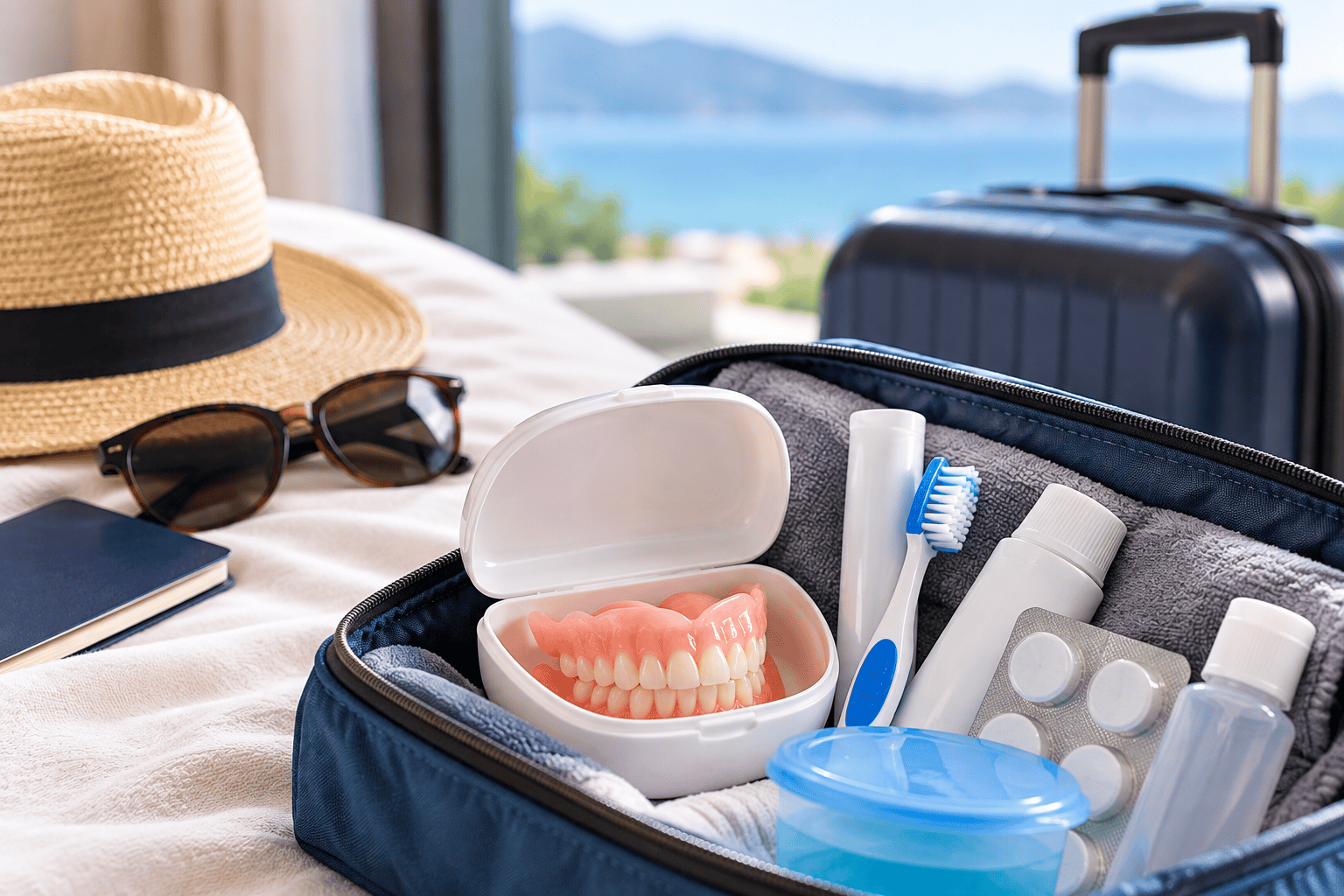
Travelling should be something to look forward to, whether the trip involves a weekend away, a family visit, a cruise, a long flight, or several weeks outside the country. For denture wearers, however, preparing for a trip can sometimes come with a few extra questions. What happens if the denture becomes uncomfortable? What if it breaks? What cleaning supplies should be packed? Is it worth having the fit checked before leaving?
A little preparation can make travelling with dentures much easier.
At SureFit Denture Clinic, patients from West Vancouver, North Vancouver, Vancouver, Squamish, and surrounding areas often rely on their dentures throughout busy, active lives. Travel is no different. Dentures should allow patients to enjoy meals, conversations, photographs, social activities, and new experiences without constantly worrying about how their teeth feel.
The best approach is to deal with small concerns before leaving and to pack the essentials needed to keep dentures clean, comfortable, and protected throughout the trip.
Have Your Dentures Checked Before a Longer Trip
If a denture has been feeling slightly loose, uncomfortable, or different lately, the days before a trip are not the time to ignore it.
Small denture problems have a habit of becoming much more noticeable when normal routines change. Long flights, unfamiliar foods, more time spent eating in restaurants, and longer days away from home can all make an existing fit problem harder to overlook.
A denture that already moves during meals may become frustrating while travelling. A small sore spot may become increasingly uncomfortable after several long days of wear. A tiny crack can potentially worsen if the appliance is dropped or subjected to additional pressure.
Having the denture assessed before leaving can provide greater peace of mind.
Sometimes the solution is as simple as a small adjustment. In other situations, a denture reline may help improve the fit if the gums have changed over time. If the appliance has a crack, loose tooth, or other structural issue, professional denture repair may be more appropriate.
Addressing the problem at home is generally much easier than trying to locate unfamiliar denture care while travelling.
Do Not Ignore a Denture That Has Recently Become Loose
Dentures can gradually become looser even when there is no visible damage.
The gums and underlying jaw can change over time, which means a denture that once matched the mouth closely may eventually develop more space underneath it.
Patients sometimes compensate without realizing it. They may begin applying more adhesive, chewing primarily on one side, avoiding certain foods, or using their tongue to stabilize the denture.
These habits can become especially inconvenient while travelling.
If a denture has clearly changed in fit, it is worth having it checked before departure. A professional assessment can determine whether a minor adjustment, reline, or another solution would provide better stability.
A holiday is much more enjoyable when eating and speaking do not require constant attention to the denture.
Pack a Proper Denture Case
A durable denture case is one of the simplest items to pack, but it is also one of the most important.
Dentures can be surprisingly easy to damage when they are placed loosely on a bathroom counter, wrapped in tissue, or left beside a hotel sink.
Wrapping a denture in a napkin or tissue is particularly risky because it can accidentally be thrown away.
A proper case gives the appliance a dedicated, protected place whenever it is removed.
This is useful in hotels, on flights, during overnight stays with family, or anytime the normal home routine changes.
Keeping the case in the same location inside a toiletry bag can also make it easier to maintain a consistent routine while travelling.
Bring the Cleaning Products You Already Know
Travel is usually not the best time to experiment with an unfamiliar denture cleaning routine.
If a particular denture brush, cleanser, or soaking product works well at home, bring enough for the entire trip.
Hotel toiletries and general-purpose cleaning products should not be treated as substitutes for products intended for dentures. Some household or personal care products may be too abrasive and can affect the denture surface.
Packing a small denture care kit can keep everything organized.
A denture brush, appropriate cleanser, soaking container, protective case, and any other products normally used at home can all be kept together.
For longer trips, it can also help to pack a little more than the exact amount expected to be needed in case travel plans change.
Be Careful When Cleaning Dentures in Unfamiliar Bathrooms
Many dentures are damaged because they are accidentally dropped during cleaning.
This risk can increase while travelling because bathroom layouts are unfamiliar and sinks may be made from hard materials such as stone or ceramic.
Taking a few extra precautions can help.
Cleaning dentures over a sink partially filled with water or over a folded towel can reduce the impact if the appliance slips from the hands.
The denture should also be held securely rather than squeezed or bent during cleaning.
Travelling often means moving more quickly than usual, but slowing down for a few minutes during denture care can prevent a very inconvenient accident.
Keep Dentures Protected During Flights
Air travel can disrupt normal routines, especially on overnight or long-haul flights.
Patients who normally remove their dentures during sleep may wonder whether they should do the same on an airplane.
The appropriate routine depends on individual circumstances and the recommendations already provided by the denturist. If dentures are removed, they should be placed securely in a proper denture container rather than wrapped in tissue or placed loosely in a bag.
Cleaning products and other essentials may also be better kept in carry-on luggage rather than checked baggage.
If luggage is delayed, having the denture care essentials available can prevent a minor inconvenience from becoming a much larger problem.
Dry Mouth Can Be More Noticeable While Travelling
Long flights, changes in climate, air conditioning, medications, and reduced water intake can all contribute to a dry mouth.
For denture wearers, reduced moisture can make the mouth feel less comfortable.
Staying hydrated throughout the day can help support general oral comfort.
Patients should also pay attention to changes in the tissues underneath the denture. If dryness is contributing to irritation, the appliance may begin feeling more noticeable than usual.
Persistent discomfort should not be ignored simply because the patient is away from home.
Take Your Time With Unfamiliar Foods
Trying local food is often one of the best parts of travelling.
Denture wearers do not necessarily need to avoid new foods, but it helps to approach particularly hard, sticky, or difficult-to-chew items with a little care.
Cutting food into smaller pieces and chewing slowly can make meals more comfortable.
Chewing as evenly as possible on both sides can also help keep conventional dentures more balanced.
If a particular food causes the denture to shift significantly, continuing to force the issue may create irritation.
Travelling is supposed to be enjoyable. There is nothing wrong with choosing foods that feel comfortable rather than turning every meal into a test of the denture.
Bring Denture Adhesive If You Normally Use It
Patients who routinely use denture adhesive may want to bring enough for the entire trip, along with a little extra.
Finding the same product in another province or country is not always guaranteed.
However, adhesive should not be used as a substitute for fixing a denture that has become significantly loose.
If the amount of adhesive needed has gradually increased, that is worth discussing before travelling.
The underlying issue may be a change in fit that could be improved with professional treatment.
A denture that fits properly should not require increasingly complicated routines just to remain manageable.
What If Your Denture Breaks While Travelling?
A broken denture can be stressful at any time, but it can feel especially difficult when it happens far from home.
The first priority is to protect the remaining pieces.
If the denture cracks or breaks, collect all pieces and store them safely in the denture case. Avoid repeatedly trying to fit the pieces together, as this can cause additional damage.
If a tooth comes out of the denture, keep the tooth as well.
Depending on the severity of the damage and the length of the trip, professional repair may be needed before returning home.
If the denture can no longer be worn safely or comfortably, locating a denturist or appropriate dental professional nearby may be necessary.
Avoid Household Glue
One of the most important things to avoid is attempting to repair a broken denture with household glue.
It may seem like a quick solution, particularly while travelling, but home repairs can make professional repair more difficult.
The pieces may be positioned incorrectly, the bite can change, and materials that were never intended for use in the mouth may be introduced into the appliance.
A repair that initially looks acceptable can also fail quickly under normal chewing pressure.
Keeping the broken pieces safe and seeking professional assistance is the better approach.
Small Cracks Should Not Be Ignored Before Departure
If a crack is already visible before the trip, have it assessed.
A crack that has not yet caused the denture to separate can still indicate a weakened area.
Travel often involves changes in routine and increased handling of the denture, which may place additional stress on an already vulnerable appliance.
A relatively simple repair before departure is far more convenient than dealing with a complete fracture halfway through a trip.
At SureFit Denture Clinic, denture repairs can address cracks, breaks, damaged teeth, and other issues before they become larger problems.
What If a Sore Spot Develops While Away?
A new sore spot may develop if the denture fit is changing or if the appliance has been worn for longer periods than usual.
Minor tenderness may sometimes improve when the tissues are given appropriate rest, but persistent pain should not be ignored.
Avoid attempting to file down or reshape the denture yourself.
The area causing the pressure may be very small, and removing material from the wrong location can make the fit worse.
If the irritation becomes significant, professional assessment may be needed.
Once back home, recurring sore spots should be checked even if the discomfort temporarily settles down.
Recently Adjusted Dentures Deserve Extra Attention
If a denture has recently been adjusted, relined, repaired, or replaced, consider whether enough time remains before a major trip to make sure everything feels comfortable.
Ideally, patients should have an opportunity to wear the denture during normal daily routines before leaving for an extended period.
That provides time for small concerns to become noticeable and, if necessary, be corrected.
Planning ahead can be particularly important after receiving immediate dentures, because the mouth is actively healing and the fit can change more quickly during that period.
Patients travelling soon after extractions should discuss the timing with the professionals involved in their treatment.
Travelling With Complete Dentures
Patients wearing complete dentures depend entirely on the appliance to replace the missing teeth in that arch.
This makes stability and comfort especially important while travelling.
Before leaving, pay attention to whether the denture rocks during meals, creates new pressure areas, or has become noticeably looser.
A denture that has already become difficult to manage at home is unlikely to become easier during a busy trip.
An assessment beforehand can determine whether adjustments or a reline may improve the experience.
Travelling With Partial Dentures
Patients with partial dentures should also pay attention to the health of their remaining natural teeth.
Travel routines can sometimes lead to rushed cleaning, late nights, and changes in eating habits.
The natural teeth supporting or surrounding a partial denture still need thorough daily care.
The partial itself should also be cleaned carefully, particularly around clasps and areas where food can collect.
If the partial suddenly feels tighter, looser, or different around the natural teeth, avoid forcing it into place.
A change in fit deserves professional attention.
Travelling With Implant Dentures
Patients with implant dentures benefit from additional stability, but that does not eliminate the need for proper care.
The denture and the areas around the implant attachments should continue to be cleaned according to the normal routine.
Any sudden change in the way the denture connects, releases, or feels should be taken seriously.
Implant attachments can require maintenance over time, and patients should not attempt to modify components themselves while away.
A more stable denture can make travel particularly enjoyable because eating, speaking, and social activities may feel more predictable, but ongoing maintenance remains important.
Keep Important Information Accessible
Before a longer trip, it can be useful to save the contact information for the denture clinic in your phone.
If something happens while away, having access to information about the current denture, recent treatment, or previous repairs may be helpful.
Patients with more complex treatment, such as implant supported dentures, may also want to know basic details about their denture and implant system before travelling.
Most trips will pass without any denture emergency at all, but preparation can make an unexpected situation much easier to manage.
Consider a Checkup Before an Extended Vacation
A short weekend trip may not require special planning, but a multi-week vacation, cruise, or extended international trip may justify a denture check beforehand, particularly if it has been a while since the last assessment.
The appointment does not necessarily mean treatment will be required.
It may simply confirm that the denture is in good condition and functioning as expected.
That reassurance can be valuable when travelling somewhere where familiar denture care will not be readily available.
Patients travelling from the Vancouver area may find it easier to address minor concerns at home before heading to a destination where treatment options are unknown.
Do Not Let Denture Concerns Limit Travel
Dentures are meant to restore function and confidence, not prevent patients from enjoying an active life.
Travelling, attending family events, trying new restaurants, spending time outdoors, and exploring new places should still be part of life with dentures.
Good planning can reduce much of the uncertainty.
Most denture wearers do not need an extensive travel kit or complicated routine. They simply need the essentials, a denture that fits comfortably, and a plan for what to do if something unexpected happens.
Preparing for Travel From West Vancouver and Beyond
For patients in West Vancouver, North Vancouver, Vancouver, Squamish, and surrounding communities, preparing for a trip can be a good opportunity to pay attention to how the denture has been feeling recently.
If it is comfortable, stable, and in good condition, there may be very little that needs to be done beyond packing the usual care supplies.
If something has changed, however, it is better to address the concern before the suitcase is packed.
A slightly loose denture, recurring sore spot, small crack, or damaged tooth can often be assessed and treated more conveniently at home than while travelling.
Final Thoughts
Travelling with dentures does not need to be complicated.
Start with a denture that feels comfortable and dependable. Pack the cleaning products and supplies you already use, protect the denture in a proper case, and take extra care when handling it in unfamiliar bathrooms or while moving between destinations.
Most importantly, do not begin a major trip hoping that an existing denture problem will simply behave itself until you return.
If the denture has become loose, uncomfortable, cracked, or otherwise different, having it assessed beforehand can make the entire trip more enjoyable.
At SureFit Denture Clinic, patients from West Vancouver, North Vancouver, Vancouver, Squamish, and surrounding areas can have their dentures checked, adjusted, relined, or repaired before travelling.
The goal is simple: spend less time thinking about your dentures and more time enjoying where the trip takes you.
Travelling With Dentures: What to Check Before You Leave and What to Pack
Looking for dentures that feel natural and fit your life? We’re here to walk you through traditional and digital options, so you can find the best choice for your smile.
What Happens During a Denture Reline? A Simple Way to Improve the Fit of Dentures You Already Have
Looking for dentures that feel natural and fit your life? We’re here to walk you through traditional and digital options, so you can find the best choice for your smile.
What Are Immediate Dentures? How You Can Leave With Teeth the Same Day as Extractions
Looking for dentures that feel natural and fit your life? We’re here to walk you through traditional and digital options, so you can find the best choice for your smile.

Implant Dentures for Active Adults: Why Stability Matters Beyond Eating
Looking for dentures that feel natural and fit your life? We’re here to walk you through traditional and digital options, so you can find the best choice for your smile.
Booking your first denture consultation is an important step toward improving comfort, restoring confidence, and finding the right solution for your smile. For many people, that first visit also comes with questions. They want to know what the appointment will involve, what the clinic will be looking for, and how treatment recommendations are made. At SureFit Denture Clinic in West Vancouver, consultations are designed to be comfortable, personalized, and informative, giving patients a clear understanding of their options and what comes next. SureFit’s service pages note that consultations for services like complete, partial, and implant dentures typically last about an hour and are intended to be a relaxed, stress-free experience.
A consultation is not only about deciding whether dentures are needed. It is about understanding your smile, your goals, your current oral condition, and the type of result that will best support daily life. Some patients arrive knowing they need a replacement for missing teeth. Others are not yet sure whether they need a repair, a reline, a partial denture, a complete denture, or a more secure option such as implant dentures. The consultation is where those questions begin to take shape in a practical and personalized way.
Why the First Consultation Matters
The first consultation sets the foundation for everything that follows. A denture should never be approached as a one-size-fits-all solution. The fit, appearance, and function of a denture all depend on understanding the patient as an individual. That means looking carefully at the current condition of the mouth, listening to any concerns about comfort or appearance, and discussing how the denture needs to function in everyday life.
This first appointment is also where many patients begin to feel more at ease. Tooth loss and denture treatment can feel overwhelming at first, especially for someone who has never gone through the process before. A thoughtful consultation helps replace uncertainty with a clearer plan. It also gives patients the opportunity to ask questions, understand the treatment options in front of them, and move forward with more confidence.
A Comfortable Conversation About Your Needs
The consultation usually begins with a conversation. This part of the visit is important because it helps shape the rest of the appointment. Your denturist will want to understand what has brought you in, what concerns you may already have, and what kind of result you are hoping to achieve.
Talking About Your Current Situation
Some patients come in because they are missing teeth and want to explore their options for the first time. Others already wear dentures but are dealing with looseness, discomfort, visible wear, or a fit that no longer feels right. In that case, the conversation may include whether denture repair, a reline, or a new denture would make the most sense based on the condition of the current appliance.
Discussing Comfort, Function, and Appearance
The first consultation is also where your priorities become part of the treatment plan. For some people, the biggest concern is eating comfortably again. For others, it is speaking clearly or feeling more confident when smiling. In many cases, it is a combination of all three. These details matter because the best denture solution should support your life in a practical and natural way.
Examining the Mouth and Oral Structures
After discussing your concerns and goals, the clinical assessment becomes the next major part of the consultation. SureFit’s implant denture page describes treatment as beginning with a comprehensive oral exam, and that same kind of individualized evaluation is central to choosing the right denture solution more broadly.
During this part of the visit, the denturist assesses the overall condition of the mouth, including the gums, the way the arches relate to one another, and the health and position of any remaining teeth. This helps determine which denture options are most suitable and what kind of fit and support can realistically be achieved.
If Natural Teeth Still Remain
If you still have healthy natural teeth, the consultation may include a discussion about whether partial dentures are the best path forward. Partial dentures can be an excellent option when the goal is to replace missing teeth while preserving the teeth that are still healthy and functional.
If Full Replacement Is Needed
If all teeth in one arch or both arches are missing, or if the remaining teeth are too compromised to preserve long term, the conversation may turn toward complete dentures. Complete dentures are designed to restore a full smile and improve function when full arch replacement is the right next step.
Reviewing Your Denture Options
Once the exam is complete, the consultation moves into one of the most valuable parts of the visit: understanding the available treatment options. This is where the appointment becomes especially helpful for patients who are still unsure which type of denture is right for them.
At SureFit, the available service mix includes complete dentures, partial dentures, implant-supported dentures, denture repair, and same-day repairs and relines. That means the conversation can stay focused on what truly fits your needs rather than forcing every patient into the same path.
Complete Dentures
If a full smile replacement is needed, complete dentures may provide the best balance of function, appearance, and comfort. The consultation will help determine whether this option matches the condition of the mouth and your long term goals.
Partial Dentures
If healthy teeth remain and can continue supporting the smile, partial dentures may be the more conservative and practical option. This allows missing teeth to be replaced while preserving the natural teeth that are still contributing to daily function.
Implant Dentures
If greater stability is a priority, the consultation may also include a discussion about implant dentures. SureFit notes that implant denture candidacy depends in part on factors such as jaw bone support, which is why proper assessment is so important early in the process.
Digital Denture Technology May Be Part of the Conversation
SureFit also highlights digital dentures and 3D scanning as part of its modern approach to care, describing digital dentures as a cleaner, more precise alternative to older methods and noting that digital records can make future replacements easier. During your first consultation, this may become part of the discussion if digital treatment planning is the right fit for your case.
For many patients, this is reassuring. It means the consultation is not only about choosing a denture category. It is also about understanding how the denture will be planned and created. A more modern workflow can offer benefits in comfort, fit, and long term convenience, especially for patients who want a more refined treatment experience.
What You Can Expect Emotionally During the Visit
A first denture consultation is not just a clinical appointment. It is often an emotional step too. Some patients arrive feeling embarrassed about tooth loss. Others feel nervous about whether dentures will look natural or whether they will be comfortable to wear. These are normal concerns, and the first visit should help ease them rather than add to them.
SureFit’s service pages consistently describe consultations as relaxed, comfortable, and hassle-free. That matters because the right clinic experience should leave patients feeling informed and supported. A consultation should not feel rushed or impersonal. It should feel like the beginning of a thoughtful plan built around your needs.
Questions You May Want Answered at Your Consultation
Many patients benefit from preparing a few questions before the first visit. This helps make the appointment more useful and gives you a better sense of what the treatment plan may involve.
Which Denture Option Fits My Smile Best?
This is often the most important question. Whether the answer involves a full denture, a partial denture, a repair, or implant support, the consultation is where the recommendation becomes clearer.
How Will the Denture Fit and Feel?
Fit is one of the biggest concerns for patients, and understandably so. The consultation should include a discussion about comfort, retention, and what kind of outcome can be expected based on your oral condition.
What Happens After the Consultation?
Patients often want to know what comes next after the initial visit. The answer depends on the treatment plan, but the consultation should leave you with a clear sense of direction rather than uncertainty.
What Happens After the First Visit
Once the consultation is complete, the next steps depend on what the assessment has shown. In some cases, a patient may move forward with a new denture plan. In others, the best path may involve restoring an existing appliance through repair or reline. Some patients may need a more detailed discussion about implant-supported options, while others may simply need time to consider the recommendation and decide how they want to proceed.
What matters most is that the next step feels appropriate and well explained. A strong consultation should not leave you guessing. It should leave you with clarity about your options and confidence in what the clinic is recommending.
Why West Vancouver Patients Choose a Personalized Consultation
West Vancouver patients are often looking for care that feels modern, attentive, and tailored to the individual. SureFit’s combination of personalized consultations, digital denture innovation, and a broad range of denture services supports that kind of experience. The clinic’s contact page invites patients to call or email to book a denture appointment and notes that calling is the fastest way to arrange care.
That type of accessibility matters because denture treatment is not just about replacing teeth. It is about improving quality of life. The first consultation is where that process begins.
Final Thoughts
Your first denture consultation in West Vancouver should feel like the start of a solution, not the start of confusion. It is an opportunity to understand what is happening in your mouth, what options are available, and which treatment path is most likely to restore comfort, function, and confidence. At SureFit Denture Clinic, consultations are designed to be relaxed, informative, and personalized, with enough time to assess your needs and guide you toward the right next step.
Whether the best recommendation involves complete dentures, partial dentures, implant dentures, or denture repair, the goal remains the same: helping you move forward with greater comfort and a clearer sense of what your smile needs. To book an appointment, visit the SureFit contact page.