
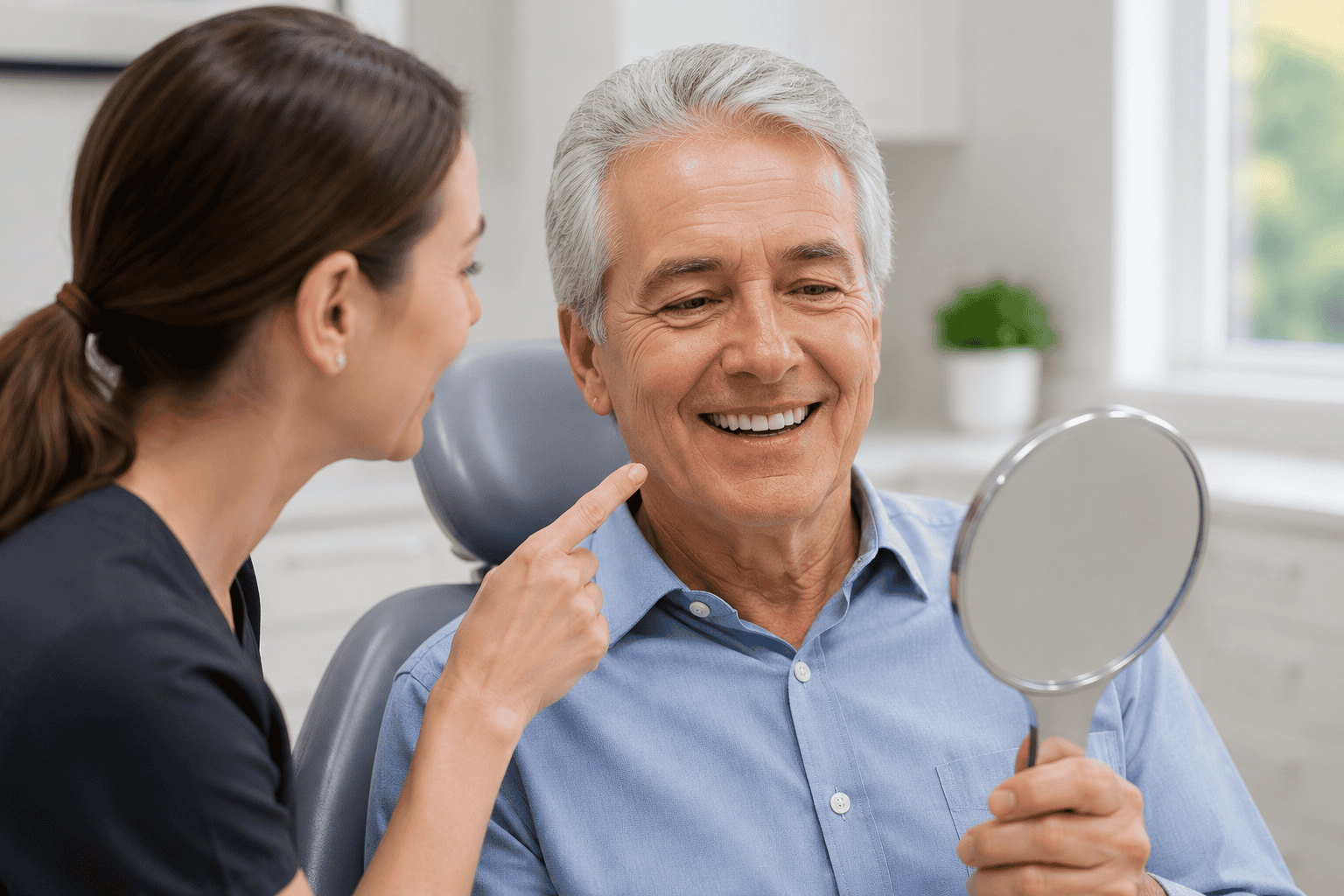
When people begin considering dentures, one of the most common concerns is appearance. Will they look obvious? Will the teeth seem too perfect? Will the smile still look like their own?
Modern dentures can be remarkably natural looking when they are designed with care. The difference comes from much more than simply choosing a set of white teeth. A natural result depends on tooth size, shape, shade, position, facial proportions, lip support, bite, and the way the smile moves during normal conversation.
At SureFit Denture Clinic in West Vancouver, denture treatment is personalized around the individual. The goal is to create a smile that restores missing teeth while still looking balanced with the patient’s face, age, features, and personality.
A successful denture should not draw attention to itself. It should help the person wearing it feel comfortable smiling, speaking, eating, and going about daily life without constantly thinking about their teeth.
Natural Looking Dentures Begin With the Individual
There is no single denture design that looks natural on everyone.
A tooth shape that suits one person perfectly may look completely different on another. Facial structure, jaw shape, lips, complexion, age, and even the way someone smiles all influence what looks appropriate.
This is why personalized denture care matters so much.
Rather than trying to create an identical smile for every patient, the denture should complement the person wearing it. The teeth need to work with the face instead of appearing separate from it.
For patients receiving complete dentures, this is especially important because an entire arch of teeth is being recreated. With partial dentures, the new teeth also need to blend naturally with the healthy teeth that remain.
Tooth Shape Has a Major Influence on the Smile
Natural teeth come in many shapes. Some are more rounded. Others are more angular. Some people naturally have broader front teeth, while others have narrower or more delicate proportions.
Selecting the right shape helps dentures feel more believable and personal.
Matching Teeth to Facial Features
The shape of the teeth should complement the overall shape and proportions of the face. A denture with teeth that are too large or too dominant can overwhelm the smile. Teeth that are too small may not provide enough presence or facial support.
The goal is balance.
A carefully selected tooth shape can create a smile that looks attractive without appearing artificial or exaggerated.
Creating Character Without Looking Imperfect
Natural smiles are rarely perfectly uniform. Small variations in position, contour, and tooth shape can actually make a denture look more realistic.
That does not mean intentionally creating an unattractive smile. It means recognizing that natural beauty often comes from subtle individuality rather than complete uniformity.
A personalized denture should look polished while still feeling believable.
Choosing a Natural Tooth Shade
Many patients assume the whitest possible tooth shade will create the best smile. In reality, the most natural looking choice is usually the shade that complements the individual.
Tooth colour should work with skin tone, facial features, age, and any remaining natural teeth.
Brighter Is Not Always More Natural
Very bright teeth can look beautiful on some patients, but they can also appear artificial if the shade does not suit the rest of the face.
A slightly softer tooth shade can sometimes create a much more realistic result while still producing a clean, healthy looking smile.
The goal should not automatically be the brightest smile possible. It should be a smile that looks appropriate and feels right for the person wearing it.
Partial Dentures Require Careful Colour Matching
Shade selection becomes especially important with partial dentures because the replacement teeth sit beside natural teeth.
The new teeth need to blend with the existing smile rather than standing out as noticeably different.
Colour, translucency, size, and shape all contribute to how successfully the partial denture integrates with the remaining teeth.
Tooth Position Changes the Entire Appearance
Even perfectly shaped and coloured teeth can look unnatural if they are positioned incorrectly.
The way teeth sit within the smile affects facial expression, speech, lip support, and the amount of tooth that shows when smiling or speaking.
How Much Tooth Should Show?
The amount of visible tooth varies from person to person. Some people naturally show more of their upper teeth when they smile, while others show less.
This should be considered when planning dentures.
Placing the teeth too high, too low, too far forward, or too far back can change the overall appearance of the face.
A natural result requires careful attention to how the teeth interact with the lips during normal expressions.
Symmetry Without Looking Artificial
Balance matters, but perfect symmetry is not always necessary.
A smile can be attractive and harmonious without every tooth appearing identical. Subtle variation can help create a result that feels more like a natural smile and less like a manufactured row of teeth.
Dentures Also Affect Facial Support
One of the most important parts of denture design happens around the teeth rather than with the teeth themselves.
When natural teeth are lost, support for the lips and cheeks can change. This may affect facial appearance, particularly around the mouth and lower face.
A properly designed denture helps restore some of that support.
Supporting the Lips Naturally
The position of the front teeth and the shape of the denture base can influence how the lips sit at rest and during smiling.
Too little support may leave the lips looking less full than they should. Too much support can create an appearance that feels bulky or unnatural.
Finding the right balance helps create a healthier and more natural facial profile.
Supporting the Cheeks and Lower Face
Complete dentures can also contribute to support through the cheeks and lower portion of the face.
This is one reason denture design cannot be based on teeth alone. The denture needs to work with the entire facial structure.
A carefully designed denture can help restore proportions that have changed following tooth loss while still maintaining an appearance appropriate for the individual.
The Bite Influences Both Appearance and Comfort
A natural looking smile should also function properly.
The bite refers to the way the upper and lower teeth meet. If that relationship is incorrect, the denture may feel unstable, create uneven pressure, or affect facial appearance.
A balanced bite contributes to more comfortable chewing and helps the dentures sit more naturally during speaking and facial movement.
The vertical relationship between the jaws is also important. If the bite is positioned too high or too low, it can affect how the lower face appears.
This is another reason precision in denture planning matters.
Speech Helps Reveal Whether a Smile Feels Natural
A denture should look good while the patient is smiling, but it also needs to work during conversation.
Teeth influence the formation of many sounds. Their position affects how the tongue, lips, and airflow work together during speech.
During the denture process, speaking provides useful information about whether the tooth position and overall design are working comfortably.
A denture that supports natural speech helps the patient feel less aware of the appliance and more comfortable in everyday conversation.
The Try-In Appointment Is an Important Part of the Process
One of the most valuable stages in creating natural looking dentures happens before the final denture is completed.
During a denture try-in, patients can preview important elements of their proposed smile. Tooth position, shape, colour, bite, facial support, and overall appearance can be reviewed while adjustments are still possible.
This gives patients an opportunity to provide honest feedback.
If the teeth feel too large, too small, too bright, or simply do not feel like the right smile yet, the try-in stage provides an opportunity to refine those details.
A patient should feel comfortable speaking up during this process. Dentures are deeply personal, and the finished smile should feel like it belongs to the person wearing it.
Old Photographs Can Sometimes Help
Patients who remember liking their natural smile before tooth loss may find older photographs useful during the planning process.
A clear image showing the natural teeth can provide insight into previous tooth shape, size, arrangement, and smile proportions.
The goal does not necessarily have to be an exact recreation. Instead, photographs can offer inspiration for creating a smile that feels familiar and appropriate.
For some patients, preserving elements of their previous smile can make the finished denture feel much more personal.
Natural Looking Partial Dentures Require a Different Approach
Creating a natural looking partial denture comes with its own challenges because the replacement teeth must blend with teeth already present in the mouth.
Colour matching becomes especially important, but so do tooth shape, size, position, and alignment.
A successful partial denture should complete the smile rather than create a noticeable division between natural and replacement teeth.
The surrounding natural teeth also influence the overall design. The goal is to restore the spaces while preserving the character of the existing smile.
Natural Looking Complete Dentures Require Full Smile Planning
With complete dentures, every visible tooth is being selected and positioned as part of the new smile.
That provides greater freedom in design, but it also makes careful planning especially important.
The denture needs to complement facial proportions, restore appropriate lip and cheek support, create a balanced bite, and provide a smile that looks believable during both rest and movement.
This is where thoughtful craftsmanship and personalized planning can make a significant difference.
Digital Technology Can Support Precision
Modern denture care can also use digital technology to create a more detailed record of the mouth and support precise planning.
At SureFit Denture Clinic, digital denture technology is part of the broader approach to modern denture care. Digital records can help improve consistency and make future adjustments or replacements easier when needed.
Technology, however, does not replace personalization.
The most advanced process still needs thoughtful decisions about tooth shape, shade, position, facial support, and the individual patient’s goals. Technology provides better tools, while experienced planning determines how those tools are used.
Implant Supported Dentures Still Need Careful Aesthetic Planning
Patients considering implant dentures often focus first on stability. Greater stability can be an important advantage, but appearance remains just as important.
An implant supported denture still needs to complement the face, support the lips appropriately, and create a smile that feels natural.
Strong retention alone does not create a successful result. Function, comfort, and aesthetics need to work together.
A Natural Smile Should Still Look Like You
One of the biggest misconceptions about dentures is that treatment means accepting a generic smile.
It should not.
Some patients want a brighter, more noticeable transformation. Others want a subtle smile that closely reflects how their natural teeth looked before. Some prefer softer tooth shapes, while others feel more confident with a stronger smile.
These preferences are personal.
The best denture is not necessarily the one that looks most impressive on its own. It is the one that looks most appropriate on the patient.
Comfort Makes a Smile Look More Natural Too
Appearance and comfort are closely connected.
When dentures feel unstable or uncomfortable, patients often move their mouth differently. They may smile more cautiously, speak less naturally, or become more aware of the appliance.
When dentures feel comfortable and supportive, expressions tend to become more relaxed.
That ease is part of what makes a smile look natural.
A person who feels confident with their dentures is more likely to smile freely and engage normally in conversations without constantly thinking about how their teeth look.
Maintaining a Natural Appearance Over Time
Dentures should be cared for consistently to protect both their appearance and their function.
Over time, denture teeth can experience wear and the fit may change as the mouth changes. Staining, damage, or looseness can also affect how natural and comfortable the appliance feels.
Professional denture repair, adjustments, relines, and eventually replacement may become appropriate depending on the condition of the appliance.
A denture that looked natural when it was first made should continue to be assessed as both the denture and the mouth change over time.
Personalized Denture Care in West Vancouver
Creating natural looking dentures requires much more than selecting replacement teeth from a catalogue.
It requires understanding the patient’s face, oral anatomy, bite, smile, preferences, and expectations.
At SureFit Denture Clinic in West Vancouver, denture care is centered on creating customized solutions that restore comfort and confidence while complementing the individual. Whether treatment involves complete dentures, partial dentures, digital dentures, or implant supported options, the goal is to create a result that feels comfortable and looks appropriate for the person wearing it.
Final Thoughts
Yes, dentures can look natural. The key is personalization.
Tooth shape, shade, position, facial support, bite, speech, and fit all influence whether the finished smile feels believable and balanced. The most natural result comes from considering these details together rather than focusing on any single feature.
At SureFit Denture Clinic in West Vancouver, denture treatment is built around precision and individual care. A new denture should not simply replace missing teeth. It should restore a smile that complements the face, supports everyday function, and helps the patient feel comfortable smiling again.
The goal is not to create a smile that looks like dentures. It is to create a smile that looks like it belongs to you.
Travelling With Dentures: What to Check Before You Leave and What to Pack
Looking for dentures that feel natural and fit your life? We’re here to walk you through traditional and digital options, so you can find the best choice for your smile.
What Happens During a Denture Reline? A Simple Way to Improve the Fit of Dentures You Already Have
Looking for dentures that feel natural and fit your life? We’re here to walk you through traditional and digital options, so you can find the best choice for your smile.
What Are Immediate Dentures? How You Can Leave With Teeth the Same Day as Extractions
Looking for dentures that feel natural and fit your life? We’re here to walk you through traditional and digital options, so you can find the best choice for your smile.

Implant Dentures for Active Adults: Why Stability Matters Beyond Eating
Looking for dentures that feel natural and fit your life? We’re here to walk you through traditional and digital options, so you can find the best choice for your smile.
Booking your first denture consultation is an important step toward improving comfort, restoring confidence, and finding the right solution for your smile. For many people, that first visit also comes with questions. They want to know what the appointment will involve, what the clinic will be looking for, and how treatment recommendations are made. At SureFit Denture Clinic in West Vancouver, consultations are designed to be comfortable, personalized, and informative, giving patients a clear understanding of their options and what comes next. SureFit’s service pages note that consultations for services like complete, partial, and implant dentures typically last about an hour and are intended to be a relaxed, stress-free experience.
A consultation is not only about deciding whether dentures are needed. It is about understanding your smile, your goals, your current oral condition, and the type of result that will best support daily life. Some patients arrive knowing they need a replacement for missing teeth. Others are not yet sure whether they need a repair, a reline, a partial denture, a complete denture, or a more secure option such as implant dentures. The consultation is where those questions begin to take shape in a practical and personalized way.
Why the First Consultation Matters
The first consultation sets the foundation for everything that follows. A denture should never be approached as a one-size-fits-all solution. The fit, appearance, and function of a denture all depend on understanding the patient as an individual. That means looking carefully at the current condition of the mouth, listening to any concerns about comfort or appearance, and discussing how the denture needs to function in everyday life.
This first appointment is also where many patients begin to feel more at ease. Tooth loss and denture treatment can feel overwhelming at first, especially for someone who has never gone through the process before. A thoughtful consultation helps replace uncertainty with a clearer plan. It also gives patients the opportunity to ask questions, understand the treatment options in front of them, and move forward with more confidence.
A Comfortable Conversation About Your Needs
The consultation usually begins with a conversation. This part of the visit is important because it helps shape the rest of the appointment. Your denturist will want to understand what has brought you in, what concerns you may already have, and what kind of result you are hoping to achieve.
Talking About Your Current Situation
Some patients come in because they are missing teeth and want to explore their options for the first time. Others already wear dentures but are dealing with looseness, discomfort, visible wear, or a fit that no longer feels right. In that case, the conversation may include whether denture repair, a reline, or a new denture would make the most sense based on the condition of the current appliance.
Discussing Comfort, Function, and Appearance
The first consultation is also where your priorities become part of the treatment plan. For some people, the biggest concern is eating comfortably again. For others, it is speaking clearly or feeling more confident when smiling. In many cases, it is a combination of all three. These details matter because the best denture solution should support your life in a practical and natural way.
Examining the Mouth and Oral Structures
After discussing your concerns and goals, the clinical assessment becomes the next major part of the consultation. SureFit’s implant denture page describes treatment as beginning with a comprehensive oral exam, and that same kind of individualized evaluation is central to choosing the right denture solution more broadly.
During this part of the visit, the denturist assesses the overall condition of the mouth, including the gums, the way the arches relate to one another, and the health and position of any remaining teeth. This helps determine which denture options are most suitable and what kind of fit and support can realistically be achieved.
If Natural Teeth Still Remain
If you still have healthy natural teeth, the consultation may include a discussion about whether partial dentures are the best path forward. Partial dentures can be an excellent option when the goal is to replace missing teeth while preserving the teeth that are still healthy and functional.
If Full Replacement Is Needed
If all teeth in one arch or both arches are missing, or if the remaining teeth are too compromised to preserve long term, the conversation may turn toward complete dentures. Complete dentures are designed to restore a full smile and improve function when full arch replacement is the right next step.
Reviewing Your Denture Options
Once the exam is complete, the consultation moves into one of the most valuable parts of the visit: understanding the available treatment options. This is where the appointment becomes especially helpful for patients who are still unsure which type of denture is right for them.
At SureFit, the available service mix includes complete dentures, partial dentures, implant-supported dentures, denture repair, and same-day repairs and relines. That means the conversation can stay focused on what truly fits your needs rather than forcing every patient into the same path.
Complete Dentures
If a full smile replacement is needed, complete dentures may provide the best balance of function, appearance, and comfort. The consultation will help determine whether this option matches the condition of the mouth and your long term goals.
Partial Dentures
If healthy teeth remain and can continue supporting the smile, partial dentures may be the more conservative and practical option. This allows missing teeth to be replaced while preserving the natural teeth that are still contributing to daily function.
Implant Dentures
If greater stability is a priority, the consultation may also include a discussion about implant dentures. SureFit notes that implant denture candidacy depends in part on factors such as jaw bone support, which is why proper assessment is so important early in the process.
Digital Denture Technology May Be Part of the Conversation
SureFit also highlights digital dentures and 3D scanning as part of its modern approach to care, describing digital dentures as a cleaner, more precise alternative to older methods and noting that digital records can make future replacements easier. During your first consultation, this may become part of the discussion if digital treatment planning is the right fit for your case.
For many patients, this is reassuring. It means the consultation is not only about choosing a denture category. It is also about understanding how the denture will be planned and created. A more modern workflow can offer benefits in comfort, fit, and long term convenience, especially for patients who want a more refined treatment experience.
What You Can Expect Emotionally During the Visit
A first denture consultation is not just a clinical appointment. It is often an emotional step too. Some patients arrive feeling embarrassed about tooth loss. Others feel nervous about whether dentures will look natural or whether they will be comfortable to wear. These are normal concerns, and the first visit should help ease them rather than add to them.
SureFit’s service pages consistently describe consultations as relaxed, comfortable, and hassle-free. That matters because the right clinic experience should leave patients feeling informed and supported. A consultation should not feel rushed or impersonal. It should feel like the beginning of a thoughtful plan built around your needs.
Questions You May Want Answered at Your Consultation
Many patients benefit from preparing a few questions before the first visit. This helps make the appointment more useful and gives you a better sense of what the treatment plan may involve.
Which Denture Option Fits My Smile Best?
This is often the most important question. Whether the answer involves a full denture, a partial denture, a repair, or implant support, the consultation is where the recommendation becomes clearer.
How Will the Denture Fit and Feel?
Fit is one of the biggest concerns for patients, and understandably so. The consultation should include a discussion about comfort, retention, and what kind of outcome can be expected based on your oral condition.
What Happens After the Consultation?
Patients often want to know what comes next after the initial visit. The answer depends on the treatment plan, but the consultation should leave you with a clear sense of direction rather than uncertainty.
What Happens After the First Visit
Once the consultation is complete, the next steps depend on what the assessment has shown. In some cases, a patient may move forward with a new denture plan. In others, the best path may involve restoring an existing appliance through repair or reline. Some patients may need a more detailed discussion about implant-supported options, while others may simply need time to consider the recommendation and decide how they want to proceed.
What matters most is that the next step feels appropriate and well explained. A strong consultation should not leave you guessing. It should leave you with clarity about your options and confidence in what the clinic is recommending.
Why West Vancouver Patients Choose a Personalized Consultation
West Vancouver patients are often looking for care that feels modern, attentive, and tailored to the individual. SureFit’s combination of personalized consultations, digital denture innovation, and a broad range of denture services supports that kind of experience. The clinic’s contact page invites patients to call or email to book a denture appointment and notes that calling is the fastest way to arrange care.
That type of accessibility matters because denture treatment is not just about replacing teeth. It is about improving quality of life. The first consultation is where that process begins.
Final Thoughts
Your first denture consultation in West Vancouver should feel like the start of a solution, not the start of confusion. It is an opportunity to understand what is happening in your mouth, what options are available, and which treatment path is most likely to restore comfort, function, and confidence. At SureFit Denture Clinic, consultations are designed to be relaxed, informative, and personalized, with enough time to assess your needs and guide you toward the right next step.
Whether the best recommendation involves complete dentures, partial dentures, implant dentures, or denture repair, the goal remains the same: helping you move forward with greater comfort and a clearer sense of what your smile needs. To book an appointment, visit the SureFit contact page.